Seoul Gwangjang Market Food Plan: Subway First, Snack Chaos Second
Seoul is easier when the first day has one loud, delicious food anchor and one simple transit plan. Use the subway or AREX-to-subway connection, aim for Gwangjang Market when the group is hungry, and let the snack chaos happen after the logistics are boring.
Quick take
Use this as a practical starting point, not a polished brochure. The goal is simple: where to go, what to try, what to skip, and what kind of traveler will actually care.
Why Seoul needs one market anchor first
Seoul is one of those cities where the useful plan and the fun plan can be the same thing if nobody gets too ambitious on day one. The trap is trying to land, decode trains, chase five neighborhoods, eat every snack from a video, and still act normal by dinner. That is how a great food city turns into a group chat with jet lag.
The Here We Go move is simpler: get the airport-to-city plan boring, make Gwangjang Market the first loud food anchor, then let the second half of the day stay flexible. Seoul will provide plenty of chaos. You do not need to pre-order it.
Start with the airport train decision
Visit Korea's airport-transportation guidance describes Incheon International Airport as a major transportation hub and lists Airport Railroad, airport limousine bus, and taxi as the main ways into Seoul. It also explains the useful split: the Airport Railroad Express Train runs non-stop to Seoul Station, while the All-Stop Train serves stations such as Hongik University Station and Digital Media City and can be used with transportation cards.
That gives travelers a clean first choice. If the hotel is near Seoul Station or a straightforward subway transfer, the Express Train can reduce mental clutter. If the group is staying closer to Hongdae or another stop on the line, the All-Stop Train may make more sense. Do not pick based on vibes at the arrivals hall while everyone is holding luggage and pretending they are not hungry.
- If the hotel is near Seoul Station, price the Express Train and make the transfer plan before landing.
- If the hotel is near Hongdae, Digital Media City, or another AREX stop, compare the All-Stop Train before defaulting to a taxi.
- If someone packed like they are moving countries, use a bus or taxi without guilt. The best transit plan is the one the group can actually execute.
Use Seoul subway strength without overbuilding the day
Visit Seoul's transportation guide calls the Seoul subway system one of the most efficient ways to get around the city and notes that trains run from early morning until late night, with a network built for regular visitor use. It also highlights T-money as a transportation card option and notes fare details and transfer rules travelers should check before riding.
The practical version: Seoul is transit-friendly, but the map can make the day look smaller than it feels. Build the first day around one market, one nearby walk, and one optional second neighborhood. That keeps the trip useful instead of turning it into a subway achievement badge.
Make Gwangjang Market the first real food stop
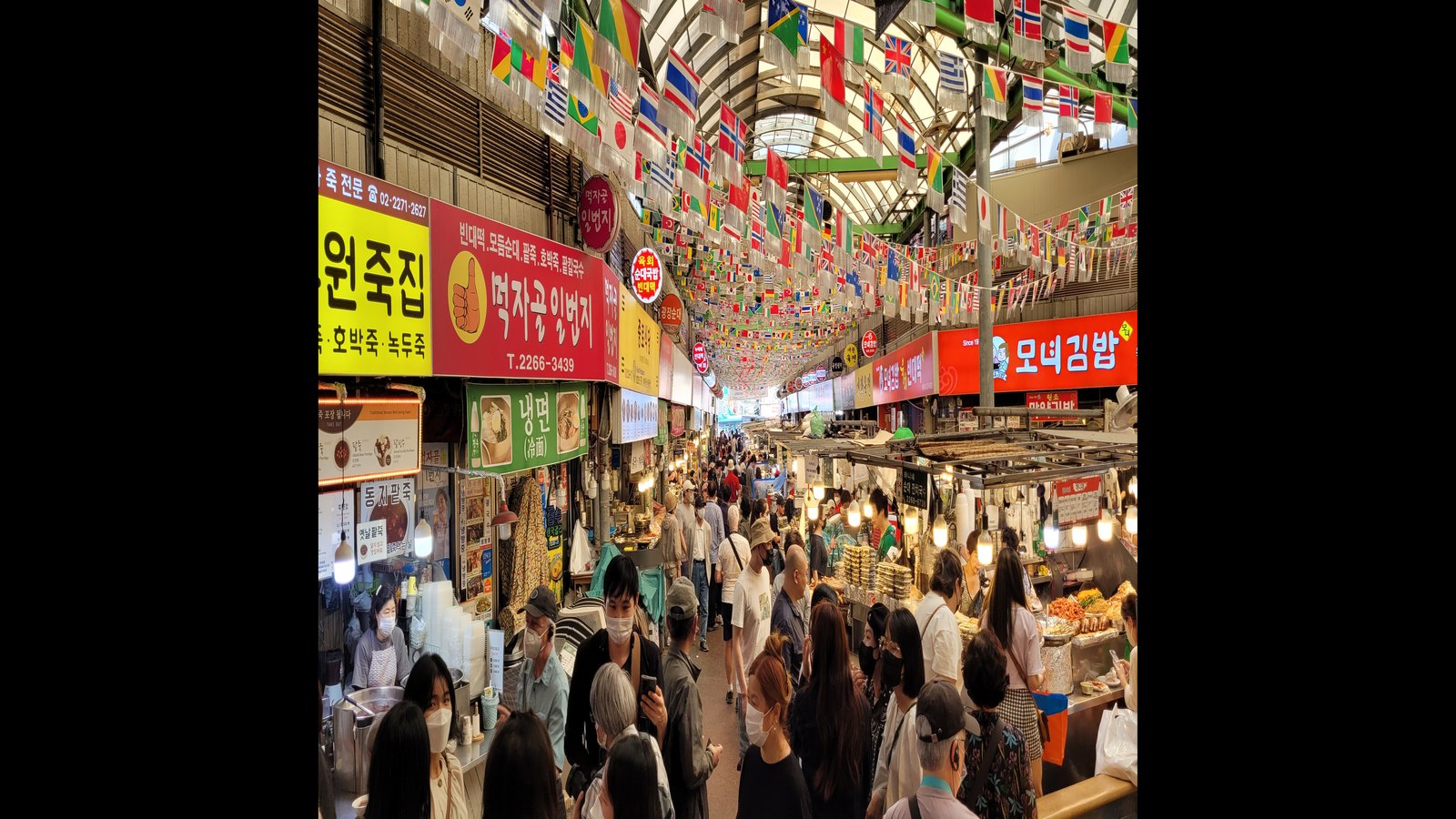
Visit Seoul's search summary for Gwangjang Market describes it as a century-old market with a vibrant atmosphere, goods ranging from clothing to food, and classic bites such as gimbap with addictive sauce, nokdu-jeon mung bean pancake, and yukhoe beef tartare. That is exactly why it works as a first food anchor: it gives the group options without forcing one perfect restaurant decision.
Go in with a short list, not a spreadsheet. Pick one pancake or fried-food lane, one rice-roll or dumpling-type bite, and one thing that looks better in person than it did online. If the market is too crowded, treat that as data. Eat one thing, walk, reset, and move on instead of trying to win the market.
- Best first bite energy: something hot, fast, and shared so nobody commits to a giant meal too early.
- Best chaos control: agree on a meetup point before the group scatters into stalls.
- Best Kevin-and-Chad rule: everybody gets one snack opinion, but nobody gets to turn lunch into a committee hearing.
The simple first-day shape
Use this as a calmer Seoul arrival or first full day:
- Airport to hotel: choose AREX Express, All-Stop, bus, or taxi based on luggage and hotel location.
- Reset: drop bags, drink water, and check whether the group is genuinely ready for a market.
- Gwangjang Market: eat a few focused bites instead of trying to cover every stall.
- Nearby walk: add a short central-Seoul wander if energy is good.
- Evening: keep dinner flexible. Seoul rewards the group that does not spend all its energy before sunset.
What is confirmed vs. what can change
The confirmed pieces are the broad structure: Incheon has rail, bus, and taxi links into Seoul; AREX has Express and All-Stop train patterns; Seoul's subway is a core visitor tool; and Gwangjang Market is a major food-and-shopping stop with classic Korean market bites. The details that can change are fares, service timing, construction, individual stall hours, and crowd levels. Check the official pages on the day you travel, then keep the plan loose enough to stay fun.
Source checks: Visit Korea airport-to-city transportation guidance; Visit Seoul transportation guidance; Visit Seoul Gwangjang Market search listing; Airport Railroad operator information.
Related videos




Good to know before you go
- Check current hours before building a day around one stop.
- Use the videos for the vibe, then verify prices and logistics before you go.
- If you only have one meal or one afternoon, start with the places that match your neighborhood and energy level.